




Research areas:
1. Improving financial and banking engineering technologies.
Scientific research focuses on the development and improvement of financial and banking engineering tools, primarily in the credit and insurance markets, as well as the implementation of digital financial solutions aimed at increasing the efficiency of financial flow management.
2. Strategic management of the region's resource potential in the context of ensuring sustainable development in the Republic of Belarus.
Scientific substantiation of a set of theoretical and methodological principles and practical mechanisms aimed at increasing the region's economic potential through the use of innovative technologies and the integration of enterprises and industries based on a cluster model. A study of resource potential as a key element in the system for ensuring sustainable development in the region.
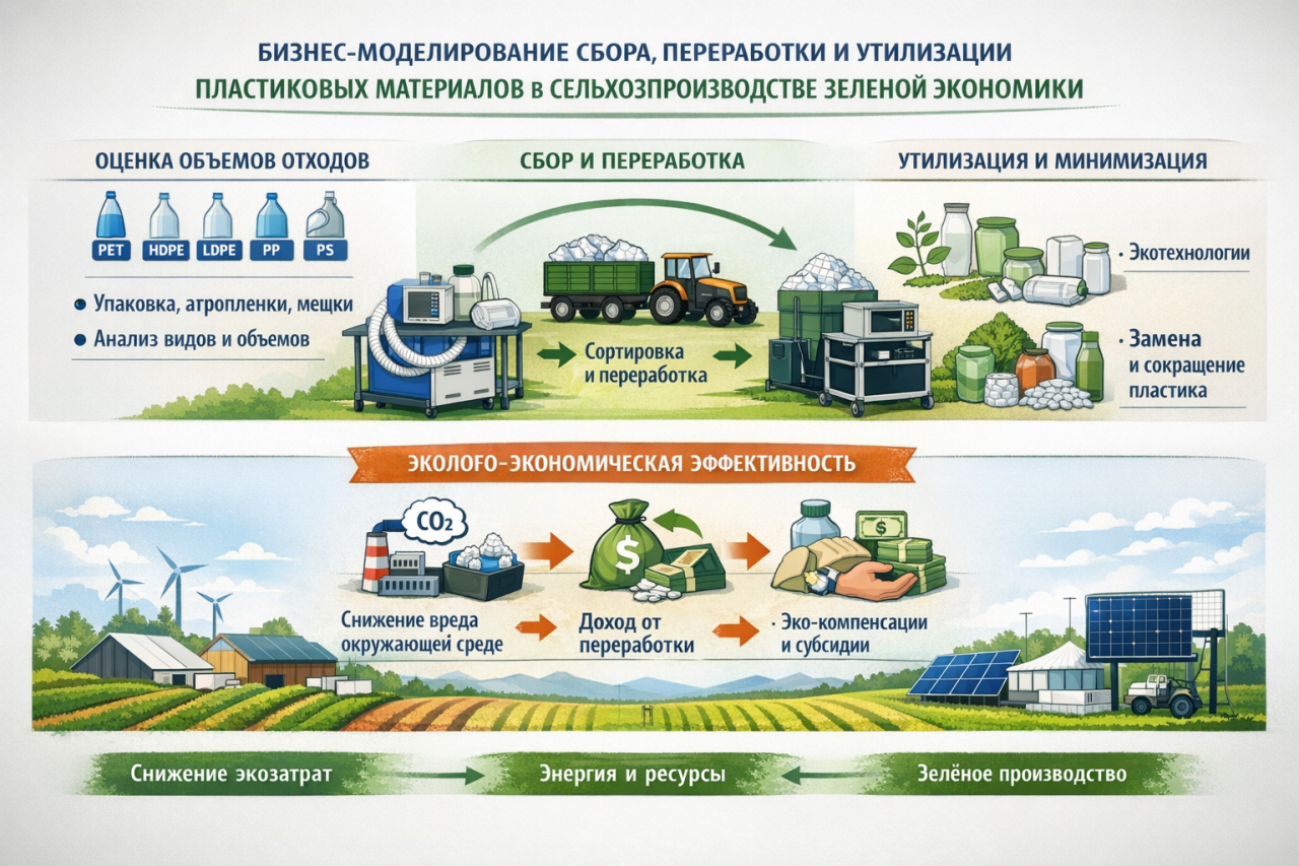
3. Business modeling for the collection, processing, disposal, and minimization of plastic use in agricultural production in the green economy cluster.
This study developed models for quantifying waste volumes by type of plastic and substantiated a business model for the collection, disposal, and recycling of plastic waste. This model is based on a system of validated indicators of environmental and economic efficiency, taking into account environmental damage arising during economic activity and its compensation or prevention through the implementation of environmental protection measures.
4. Theoretical and methodological foundations and instruments of industrial policy as a mechanism for stimulating innovative and investment development of the Belarusian economy in the context of ensuring national economic security.
A model for the formation of a tripartite "university-employer-student" responsibility system was developed. To eliminate the asymmetry in the development of the labor market and higher education, it is proposed to create support structures, namely, regional Centers for Professional Development and Entrepreneurship, whose functioning will be aimed at coordinating the interaction of various participants in the educational services market, introducing new forms of training and interaction.
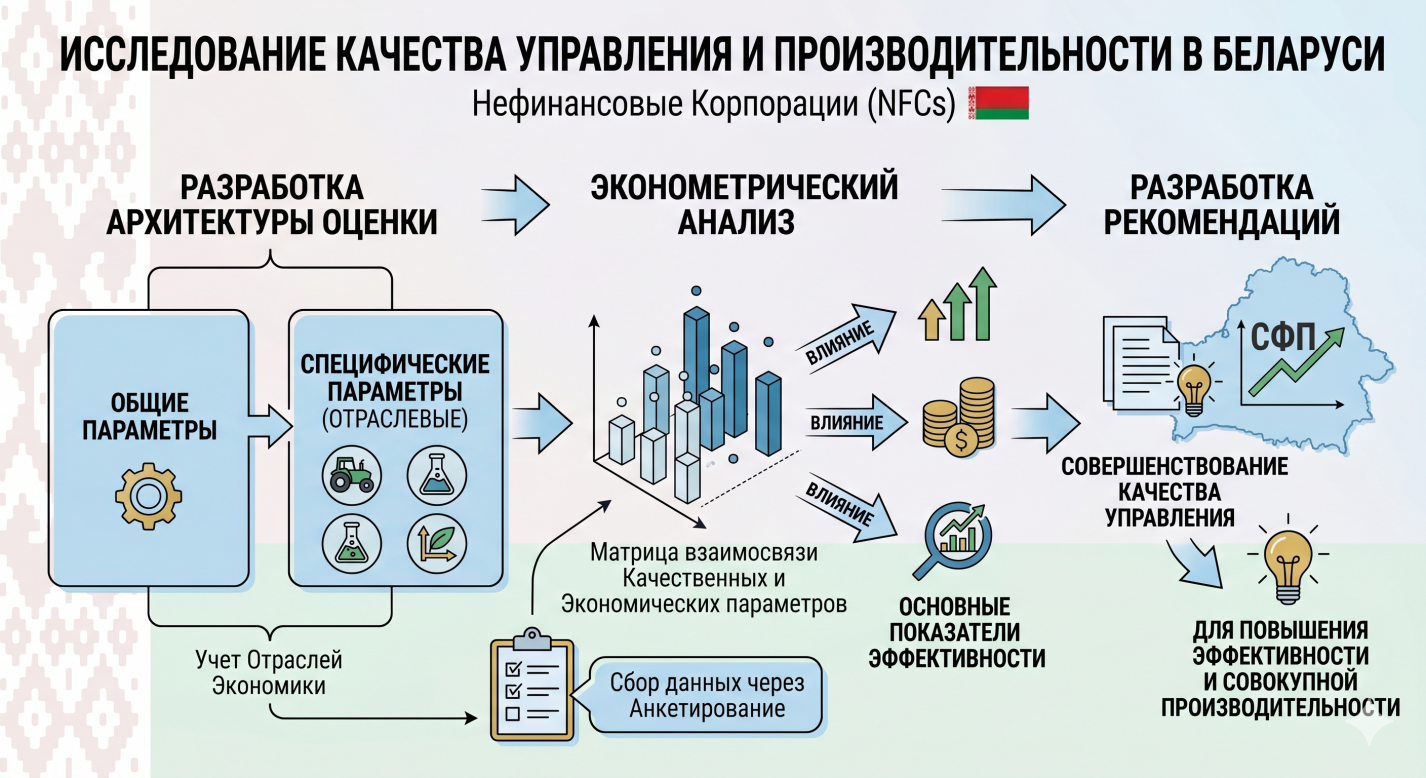
5. A study of the management quality of non-financial corporations and its impact on the total factor productivity of the Belarusian economy.
An econometric analysis of the data collected through questionnaires allowed us to construct a matrix of the relationship between qualitative and economic parameters, assess the impact of management quality on the economic performance of non-financial corporations in the Republic of Belarus, and, based on this, develop recommendations for improving the management quality of non-financial corporations to increase the total factor productivity of the Belarusian economy.
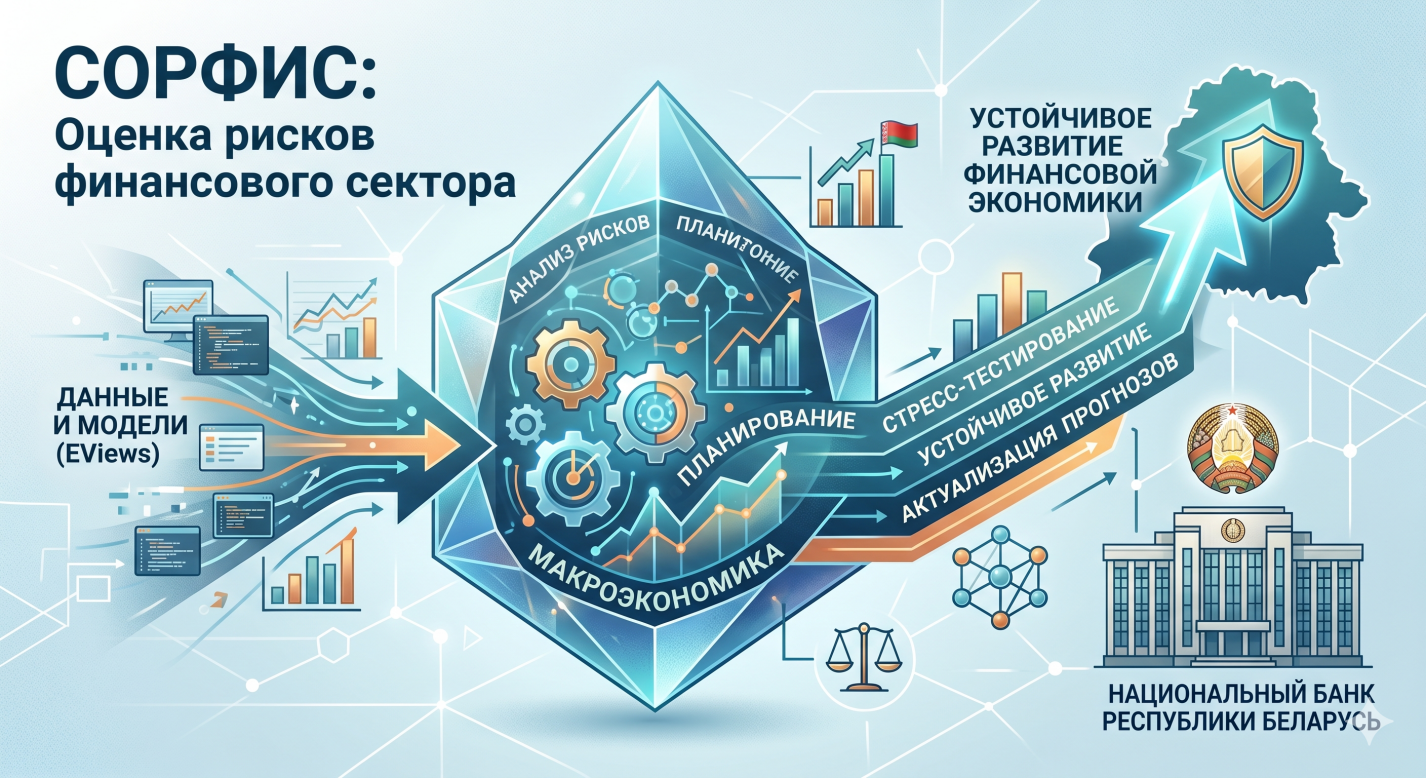
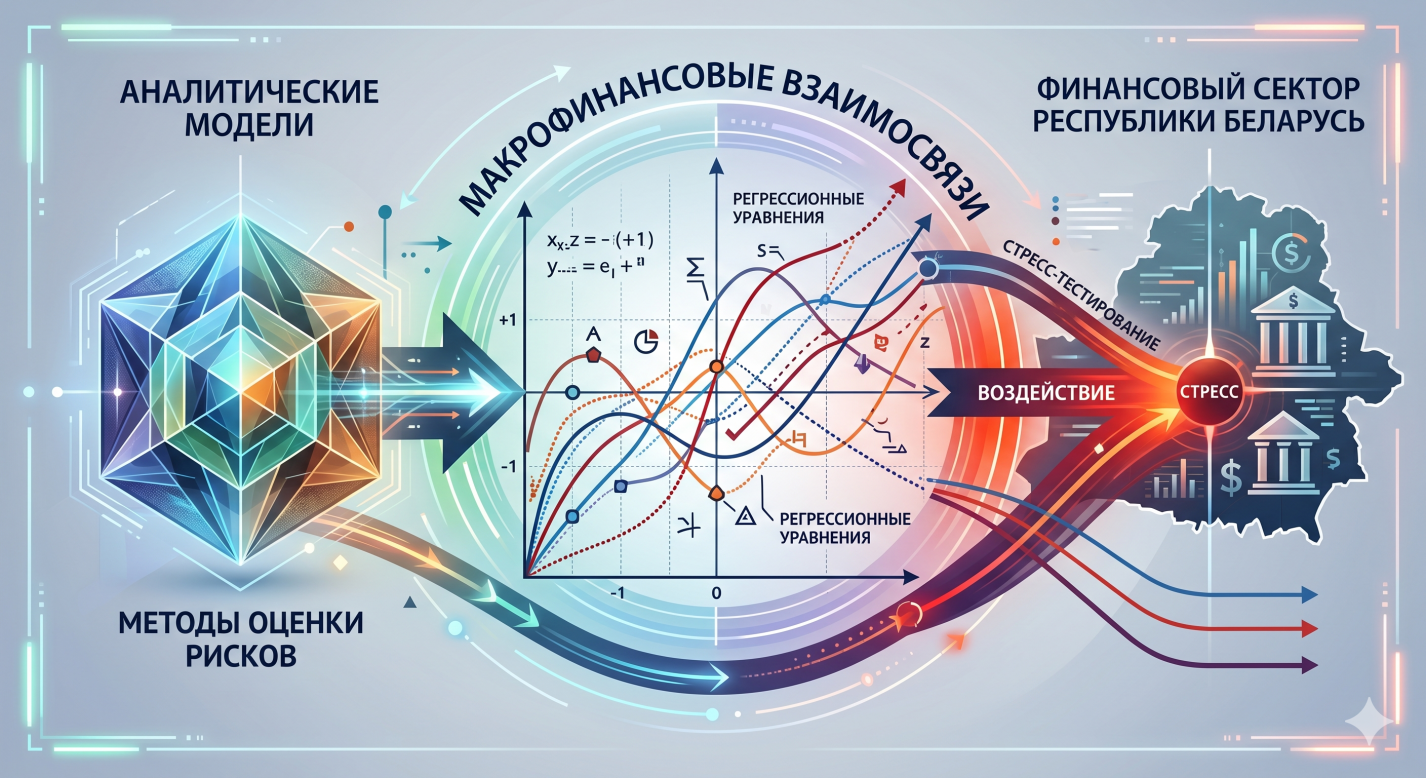
6. Development of analytical models and methods for assessing risks in the financial sector of the Republic of Belarus.
Significant scientific developments:
1. Financial Sector Risk Assessment System (SORFIS)